The Core Challenges of Remote and Difficult Access Sites
Remote and difficult access sites present a unique set of challenges in civil construction where logistics, terrain, and limited infrastructure can quickly escalate cost, risk, and program. The Stratos Civil team engineers practical, buildable solutions in constrained and remote environments.
Unlike conventional urban projects, these sites demand more than standard design approaches. They require strategic planning, constructability-driven design, and a deep understanding of how construction actually unfolds on the ground.
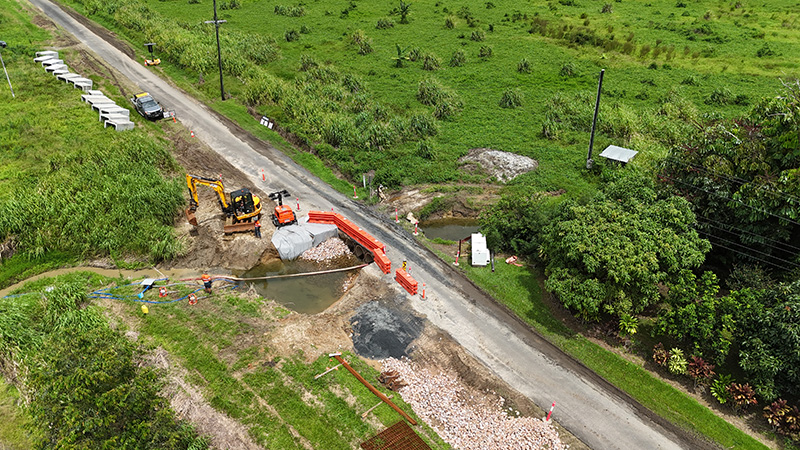
At Stratos Civil, projects in constrained or remote environments are approached with a clear priority: Design solutions that work with the site not against it.
The Core Challenges of Remote and Difficult Access Sites
1. Limited Site Access and Logistics Constraints
Restricted access can significantly impact:
Movement of plant and equipment
Delivery of materials
Construction sequencing
Poor planning in this area leads to:
Delays due to logistical bottlenecks
Increased mobilisation costs
Inefficient use of resources
Stratos Civil approach:
Designs with access routes and staging areas defined early
Minimises reliance on large or specialised plant where possible
Aligns design with realistic delivery and construction constraints
Insight: If materials and machinery can’t reach the work area efficiently, the design is already compromised.
2. Challenging Terrain and Topography
Remote sites often involve:
Steep gradients
Irregular landforms
Environmentally sensitive areas
These conditions create:
Complex earthworks requirements
Increased erosion risk
Difficult construction sequencing
Stratos Civil resolves this by:
Using terrain to inform grading strategies—not fight it
Minimising cut/fill through intelligent alignment
Designing stable, buildable slopes and access tracks
This reduces both construction complexity and environmental impact.
3. Limited Availability of Services and Infrastructure
Remote projects frequently lack:
Existing drainage systems
Utility connections
Supporting infrastructure
This requires:
Standalone or self-sufficient design solutions
Greater upfront coordination
Increased reliance on temporary works
Stratos Civil integrates:
Self-contained stormwater systems
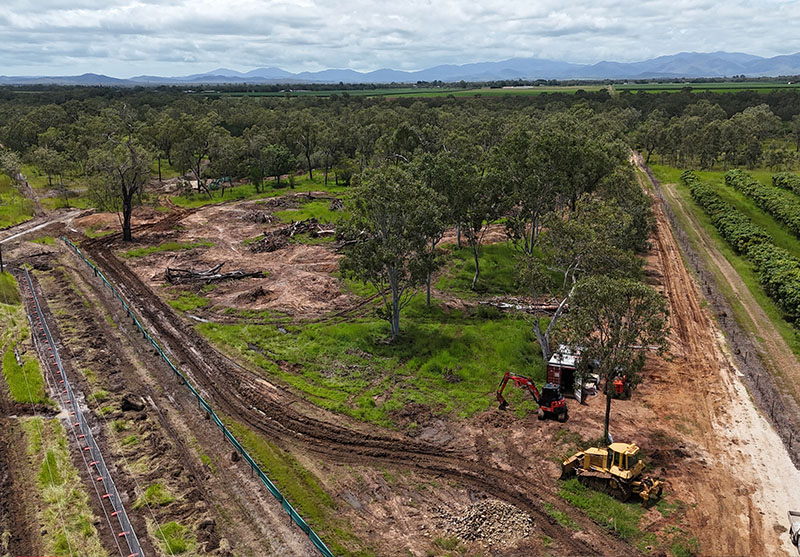
Temporary drainage and access solutions during construction
Infrastructure layouts that support staged delivery
Key Principle: Remote design must account for both permanent and temporary conditions.
4. Increased Cost Sensitivity
Transport, mobilisation, and inefficiencies are amplified in remote environments:
Material haulage distances increase
Labour and plant costs escalate
Delays have greater financial impact
Stratos Civil mitigates this through:
Reducing material movement via earthworks optimisation
Designing efficient, simplified systems
Prioritising locally available materials where feasible
Insight: In remote projects, every inefficiency is multiplied.
5. Construction Sequencing and Staging Complexity
Remote sites rarely allow for conventional construction flow:
Limited access points restrict parallel works
Temporary works become critical
Early-stage decisions impact the entire program
Stratos Civil addresses sequencing by:
Designing infrastructure that can be built in logical stages
Ensuring early works enable, not constrain later stages
Incorporating temporary access and drainage into the design
On remote sites, construction is a chain, if one link fails, the entire sequence is affected.
Remote and constrained sites expose the gap between theoretical design and real-world construction faster than any other environment. At Stratos Civil, that gap is closed early, through designs that are grounded in practicality, informed by experience, and tailored to the realities of the site.
Because in difficult access environments, success isn’t defined by what’s possible on paper, it’s defined by what can actually be built.
Because in remote environments, every inefficiency is amplified. If your design doesn’t work with the site, it won’t work on site.